
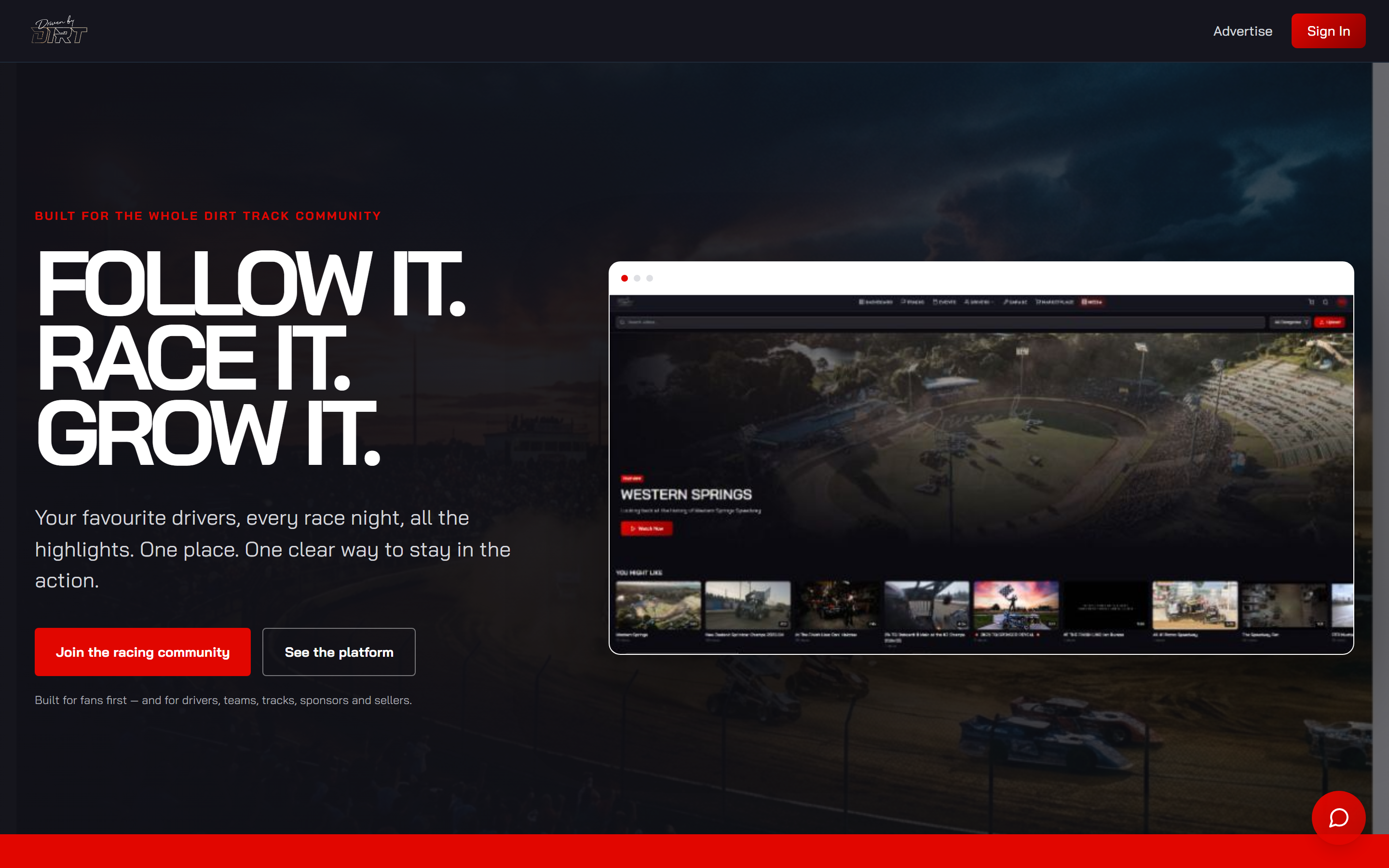
Tomorrow night at Awapuni Speedway, on the fringe of Gisborne, a gate opens, a trailer rolls in and the new speedway season begins. Best pairs, all classes, the first points of the summer on the board. On the same night clubs at Kihikihi and Palmerston North are running their own opening meetings, and by the end of next week the number of race nights under way across the country will sit past a dozen, from a grand opening at Meremere to fireworks nights in Rotorua and Napier. What almost nobody in those grandstands will notice is that another season has been quietly finishing at the same time: six years of building, breaking and rebuilding that produced the website now sitting in the pockets of the people watching the flags.
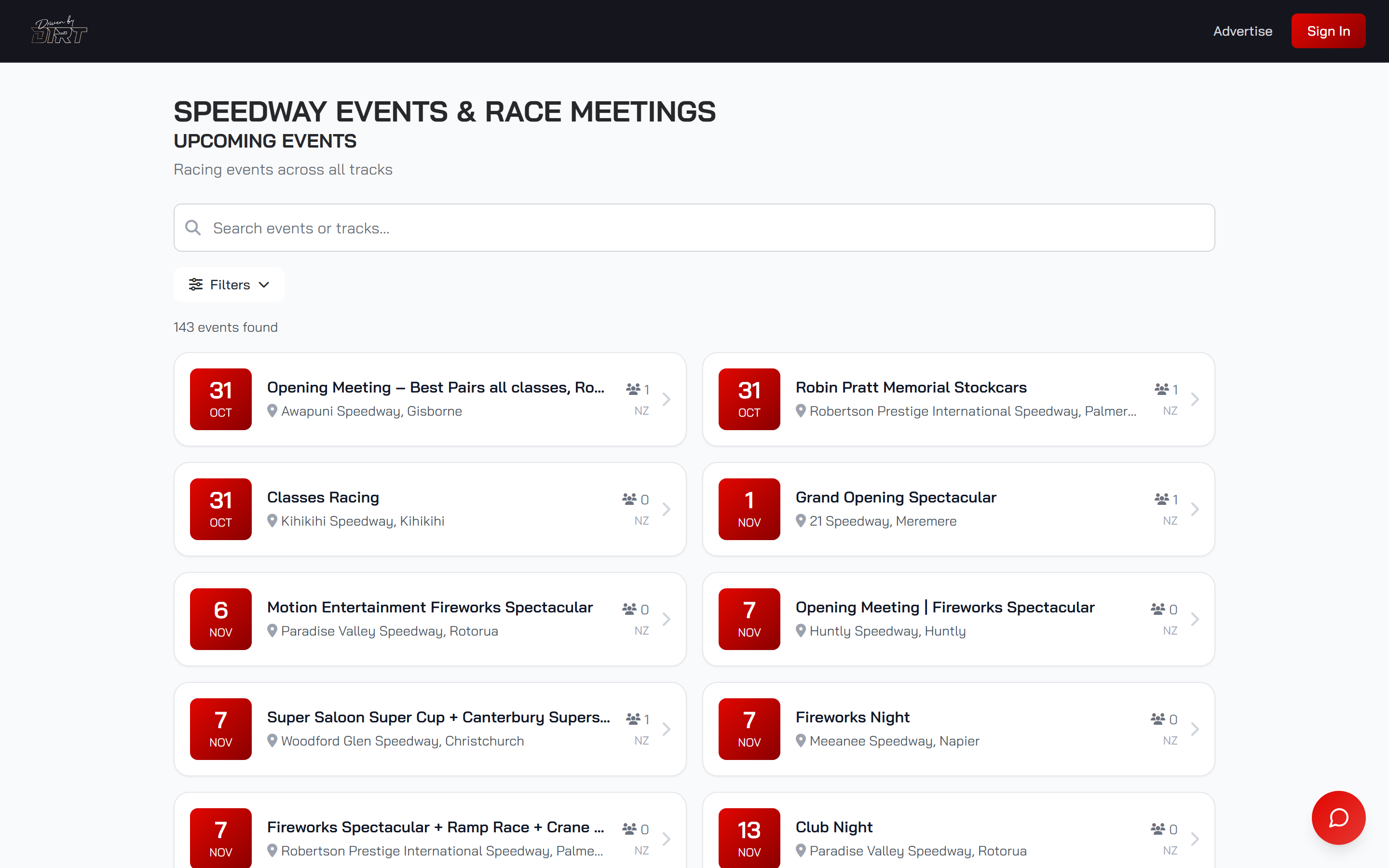
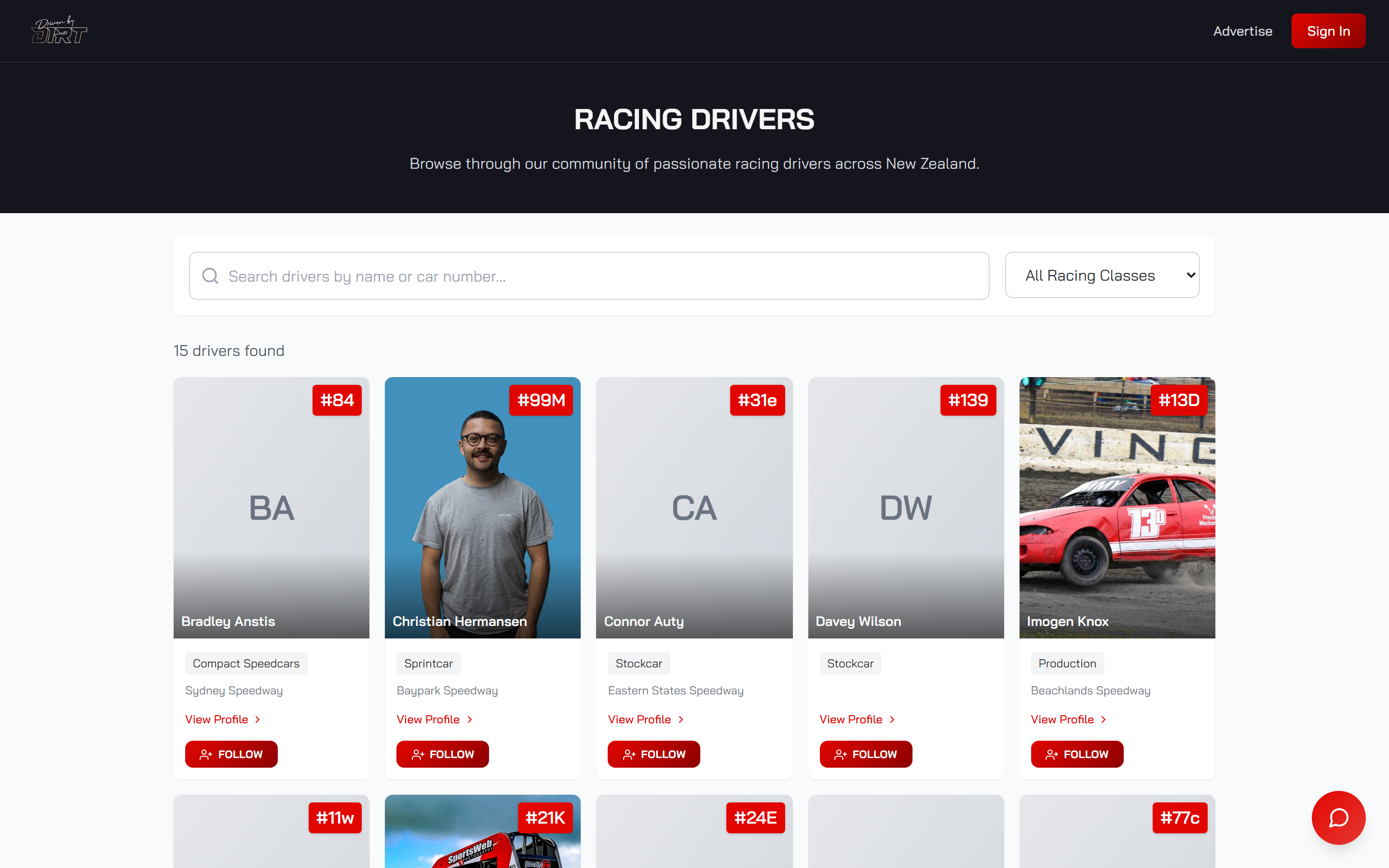
Driven By Dirt is the digital home of New Zealand dirt track speedway, and the scale of it is easy to miss because it hides inside one address. The site carries track guides for 69 circuits, from Kihikihi and Cromwell to Knoxville, Tennessee, each with a race-day forecast because in this sport the sky is a promoter. Its calendar lists 143 race meetings for the summer ahead with gate times, class lists and attendance counts. There is a marketplace where clubs, drivers and businesses sell merchandise, cars, parts and services; live and on-demand race video; 76 published stories; a shelf of digital magazines; and a workshop called the Garage where a racing team keeps its cars, its setups, its parts lists and its season accounts. Fifteen driver profiles are live and verified, and the roster grows meeting by meeting.
The company counts six years from a kitchen table to that list. The version of the story worth telling is not a launch-day one, because there was never a launch day worth the name. It is a working story: the sequence of obstacles that stood between a sport run on volunteer hours and a sport that can pay its own way, and the habit the team fell into of naming the one thing standing in the way, fixing it properly, and turning to face the next.
"Six years sounds tidy when you say it quickly," says Andrew Neru, the company's network director. "It was a laptop, a pile of race photos and a Facebook page for a long time. Everything on the site now exists because something specific was stopping people. A driver who could not be found. A club that could not sell a shirt. A fan who could not watch. You fix the thing that is actually in the way, then you find out what the next thing is. That has never changed once in six years."
The sport the company walked into ran on goodwill and paper. Results lived in club cabinets and Facebook captions that sank below the fold within a week. Entry money went into cash tins at the gate. A sponsor's logo was a photocopied sticker on a door. A family following a driver around the country pieced the season together from six different pages, none of them updated after nine at night, and every question about the weekend went to whoever answered the club phone. The driver herself, if she was lucky, broke even on tyres. None of that showed up on a results sheet, and all of it shaped the sport: who stayed in it, who left it, and who never started at all.
The shape of the season makes the problem sharper than it looks from outside. A New Zealand speedway summer runs from the first cool nights of October to the championships at the far end of March, and it is stacked with classes that each carry their own ladder: ministocks for the youngest, then production saloons, stockcars, super saloons, TQ midgets and midgets, compact speedcars, sprintcars at the top with the costs that name implies. Most families in the pits are running two cars and one tow vehicle. Most clubs are volunteers who spend their Saturdays grading a clay surface and their Sundays answering messages. Everyone is one wet weekend away from a rearranged calendar, and everyone has a story about the meeting that got away. A sport like that does not need a louder version of itself. It needs a place where the season, the people and the money all sit in the same spot.
The first years were content and shirts. Race reports, photographs, interviews, and a run of merchandise for a handful of drivers who trusted a new name. Printing went in-house in late 2023, a deliberate bet on quality and cost control that required real equipment and a real floor under a New Zealand roof. Then the peak season arrived and demand outran the shed. Orders stacked up, deliveries slipped, emails went unanswered, and the company did something unusual for a small business in that position: it published the failure.
"We deeply regret not meeting our customers' expectations and sincerely apologise for the frustration caused by late deliveries and unanswered emails," the statement read in May 2024, in the company's own account of that summer. Real-time print status went onto the website so a customer could see where a garment actually was. Staff were trained specifically to handle large orders. The backlog cleared. The lesson stayed, and it hardened into the way the place works: a promise made at checkout is a promise the whole operation has to keep, and the checkout was about to get much busier.
A club treasurer's year tells the same story from the other side of the counter. Order a run of hoodies in September at your own risk, store them in the clubroom, sell what you can at the gate, discount the rest at prizegiving, and start again. Every design was a bet with the club's money, every size a guess, and every season ended with the same quiet arithmetic that kept merchandising small. The problem was never that clubs did not want to sell. It was that the whole risk of selling sat on the people with the least room to carry it.
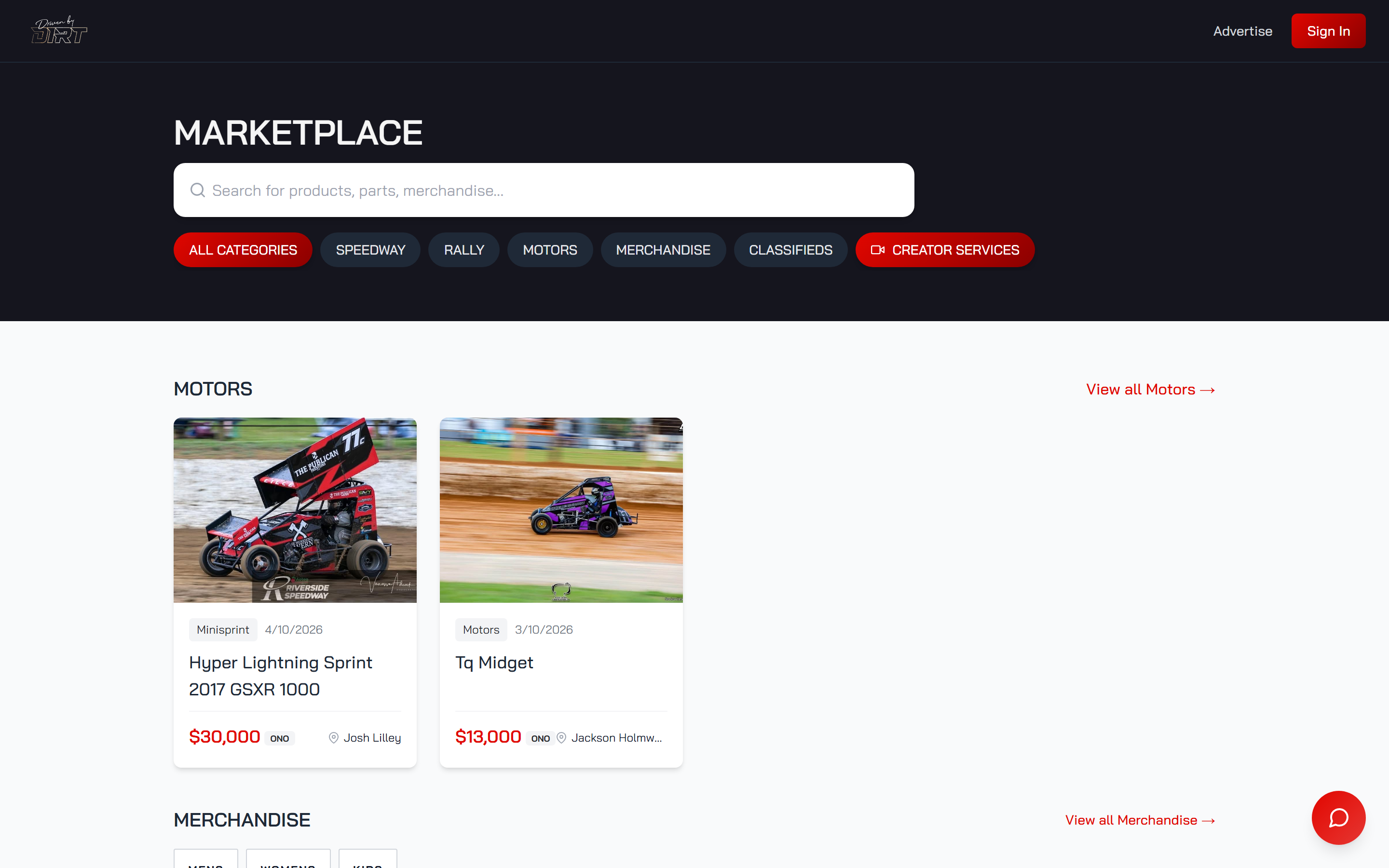
By spring the obstacle had changed shape. Printing was under control; selling was not. Drivers had nowhere to put a product range. Clubs ordered a year of merchandise in one optimistic run and hoped. Businesses that wanted to reach speedway families had nowhere to stand at all. The marketplace had opened in late 2023 as a first answer, but the version that exists today is a rebuild, and the rebuild is the part that matters. Every store is a complete shop, and the stock problem that nearly drowned the company's own season was designed out of the system rather than patched over it.
The core of that design is print on demand drawn from the company's own print floor. A club lists a tee, and the website shows sizes and colours pulled live from actual print stock rather than a hopeful counter. Nothing is made until somebody orders it, so there is no warehouse, no preorder gamble, no pallet of unsold youth sizes in a clubroom at the end of the year. Cart, checkout and card payments sit underneath, with a buy-now-pay-later option alongside. Shipping zones cover New Zealand and Australia. Merchants get a fulfilment view, order by order, and reports behind it; customers get the same tracking discipline the company learned the hard way during the summer it would rather forget.
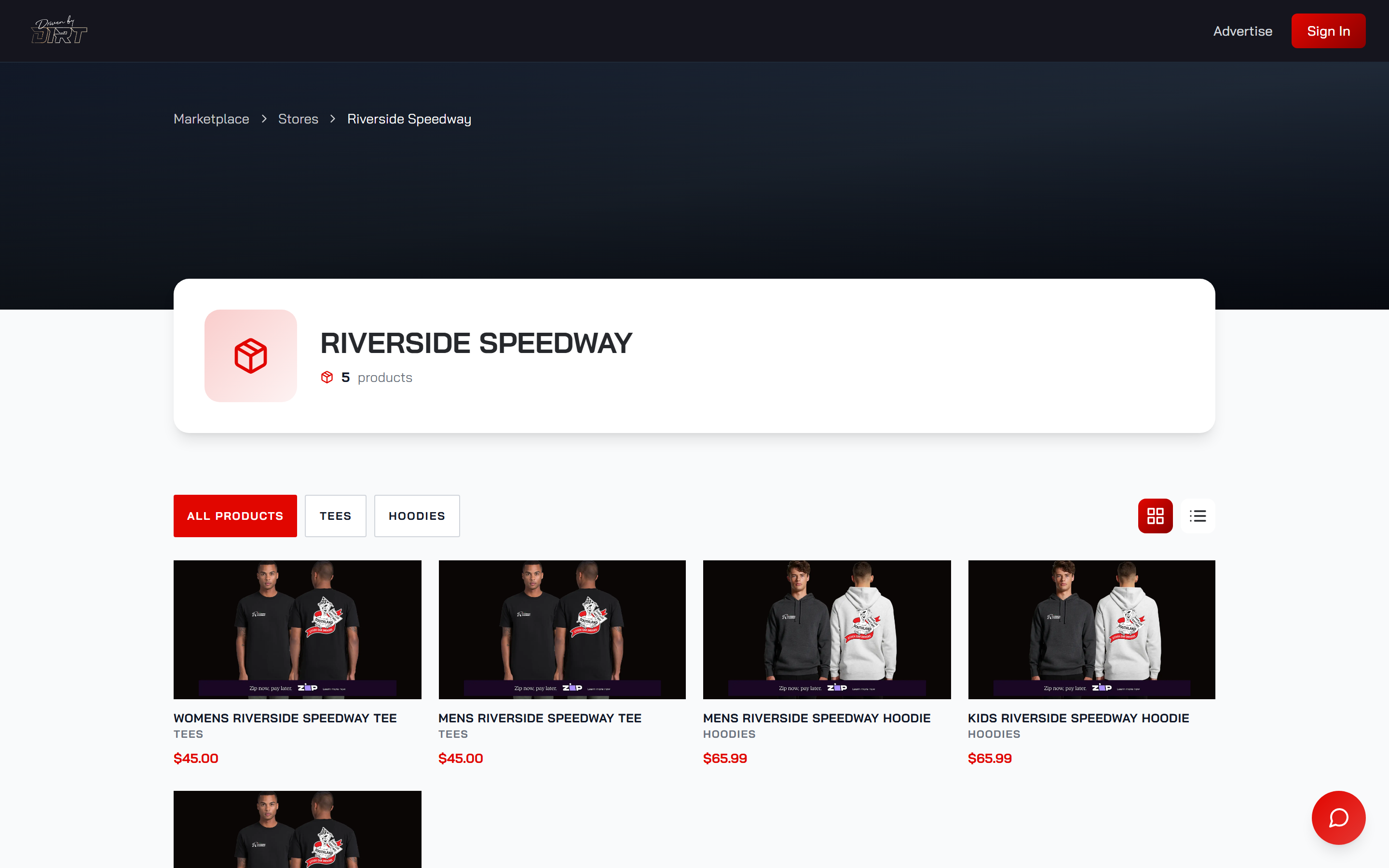
Riverside Speedway's store in Invercargill is the working example. Five products, club tees at $45 and hoodies at $65.99 across mens, womens and kids cuts, every size and colour shown live from the print floor. The treasurer of a Southland club runs a national shop from a phone in the tractor, and the club has not bought a single box of blank stock to do it.
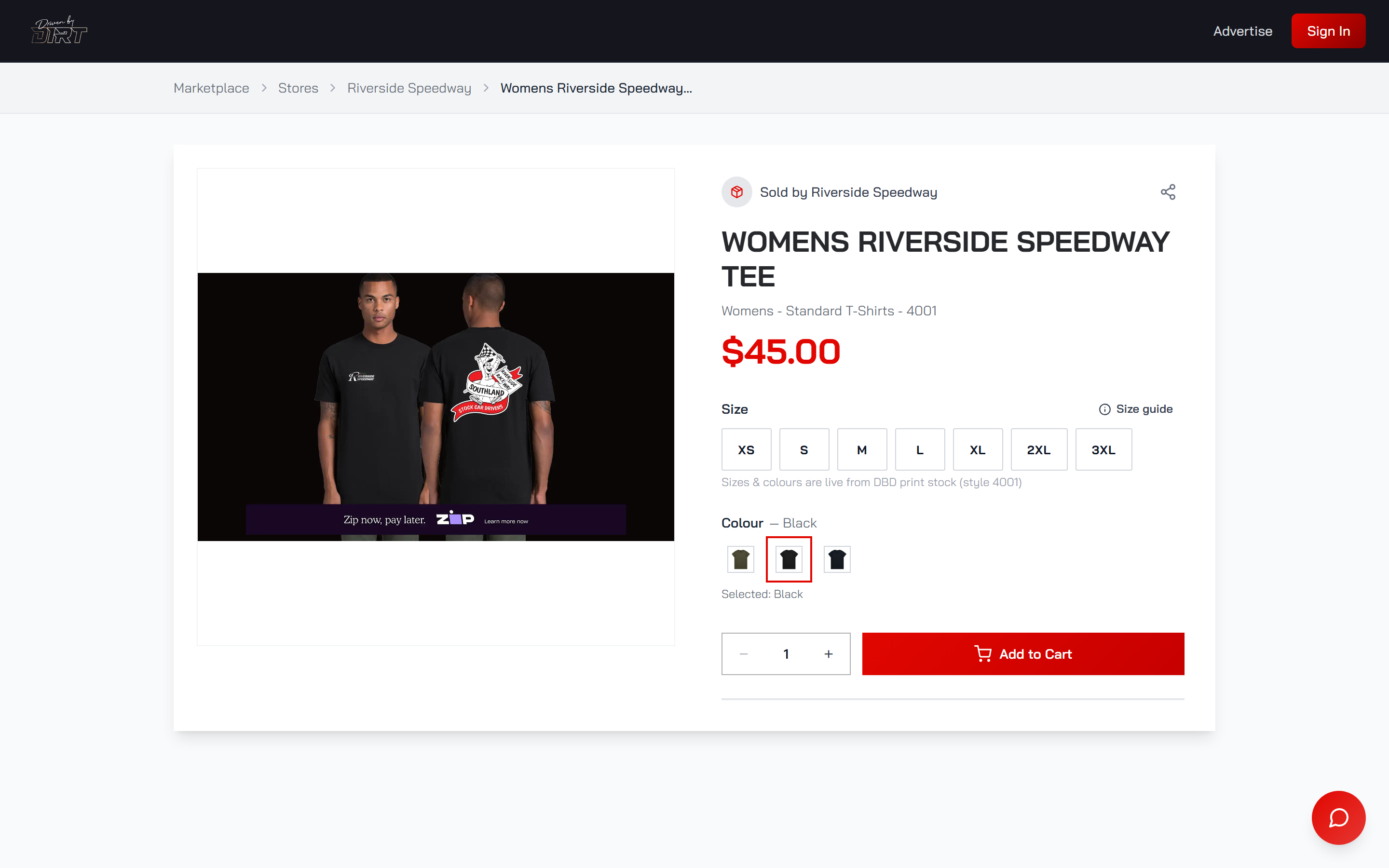
The rebuild's first real test arrived with the first genuine order through a club store, and it found a fault that every practice run had missed. A shopper paid and then watched nothing happen, which is the worst silence an online shop can produce. The fault was found and fixed within the day, and the order was completed the same afternoon it was recovered. The habit that came out of it matters more than the bug. A stalled payment can now be cleared on demand rather than abandoned, receipts and print jobs follow the money the moment it moves, and nothing in the chain depends on somebody remembering, or on luck.
The payout rule came out of the same season. A brand new store's earnings wait, held safely, until the seller connects a bank account, and release automatically the moment they do. Nobody chases anybody, and nothing depends on somebody remembering. For a sport whose participants are paid in envelope cash more often than any of them would like to admit, money that is held properly and hands itself over is not a small thing.
Behind the counter, the company also had to learn to count. Money reaches the sport in more ways than it used to, and each way has to be told apart from the others: what is revenue, what is the cost of getting an order to a door, what belongs to a club, what belongs to a driver, what arrives as support and what arrives as sponsorship. The weeks spent on that arithmetic were some of the least visible and most important of the six years. A business that intends to move money around a sport has to first agree, in its own books, on what the money is.
Three winters in, a pattern was set that the company still works to. Print solved making things. The marketplace solved selling them. Honest counting solved knowing whether any of it was working. Each stage began the same way: something specific was in the sport's way, the thing was named plainly, and it was removed rather than worked around. Nothing in that sequence looked like progress while it was happening. It looked like a list of problems. It reads like one now, which is more or less what a history of building anything is, and the habit has outlasted every single thing that was on the list.
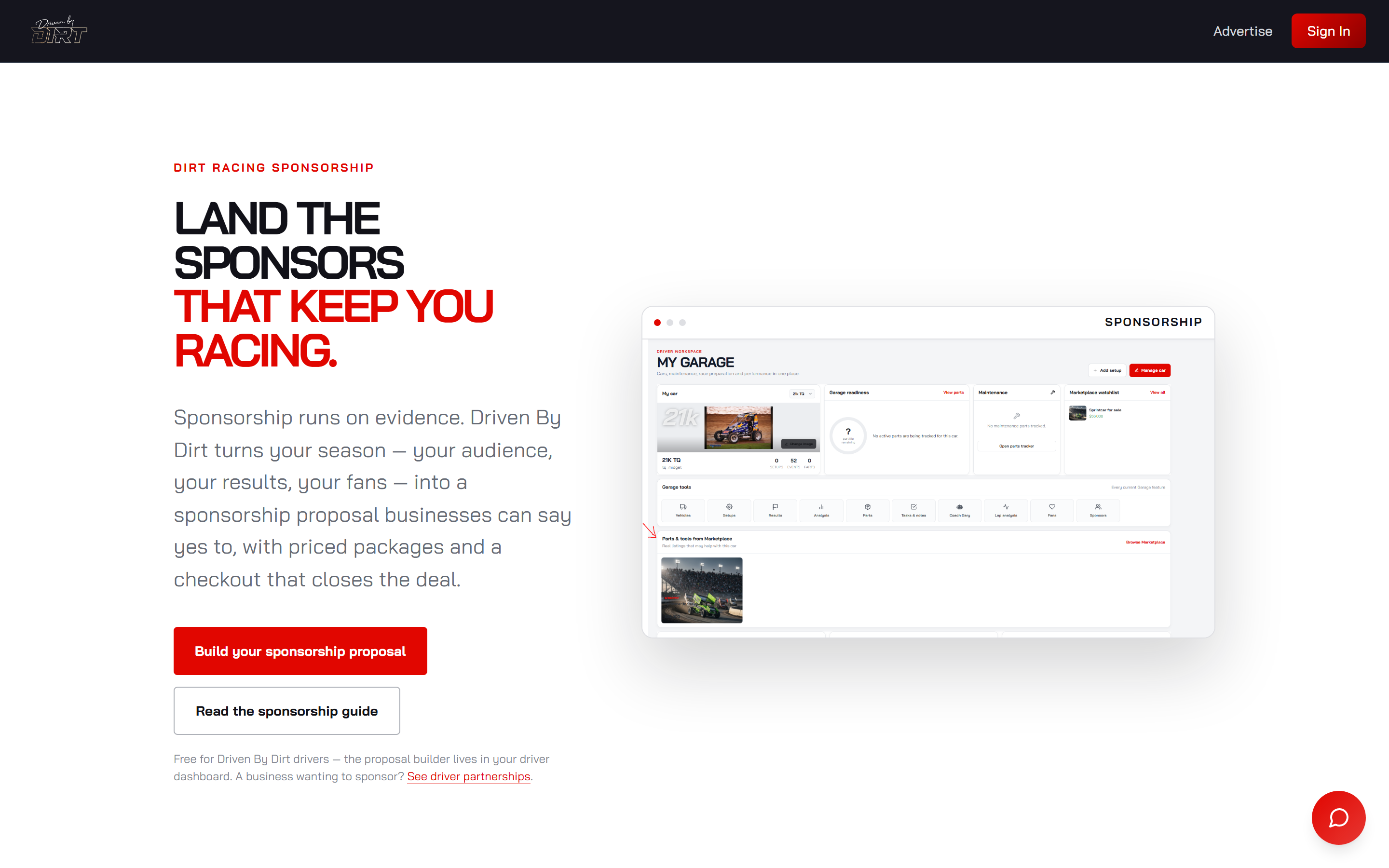
Then came the part of the sport no shop touches. A race car is a notebook in a toolbox: what it ran at Meeanee in February, what the track did in the heat, what worked when the wind swung halfway through the night, which shocks came off, which engine let go and why. The writing in those notebooks is shorthand and grease, and the people who can read it are usually the same people who wrote it. That knowledge traditionally dies with the car, the class or the teenager who wrote it down. The Garage is the platform's answer, described in its own words as cars, maintenance, race preparation and performance in one place. A driver adds each vehicle, sees readiness at a glance, and watches maintenance parts per car through a tracker that knows what is due, what is worn and what is missing the night before a meeting.
Around that core sit the tools a team actually uses. Setups are saved against meetings and tracks. Results are logged against the same car, so a season reads as a story rather than a heap of programmes. Lap analytics and coaching notes sit beside spares and engine work. Season financials run alongside the racing, which is its own quiet revolution in a sport where the money conversation usually happens in a car park. A watchlist holds saved marketplace products. Team invitations let a car shared between two drivers, or a crew member who only needs to read, be handed access without handing over a password.
The night before a meeting is where the value shows. One screen now answers the questions that used to cost a phone tree: what is on the car, what is due, what is worn, what the weather intends to do to the track, what the car ran there last time and in what conditions. A crew that used to pack on instinct packs against a list. A driver who used to arrive with a feeling arrives with a starting point. Nothing about it makes the car faster by itself. It makes the team's Wednesday nights shorter, and in a volunteer sport, shorter Wednesdays are performance.
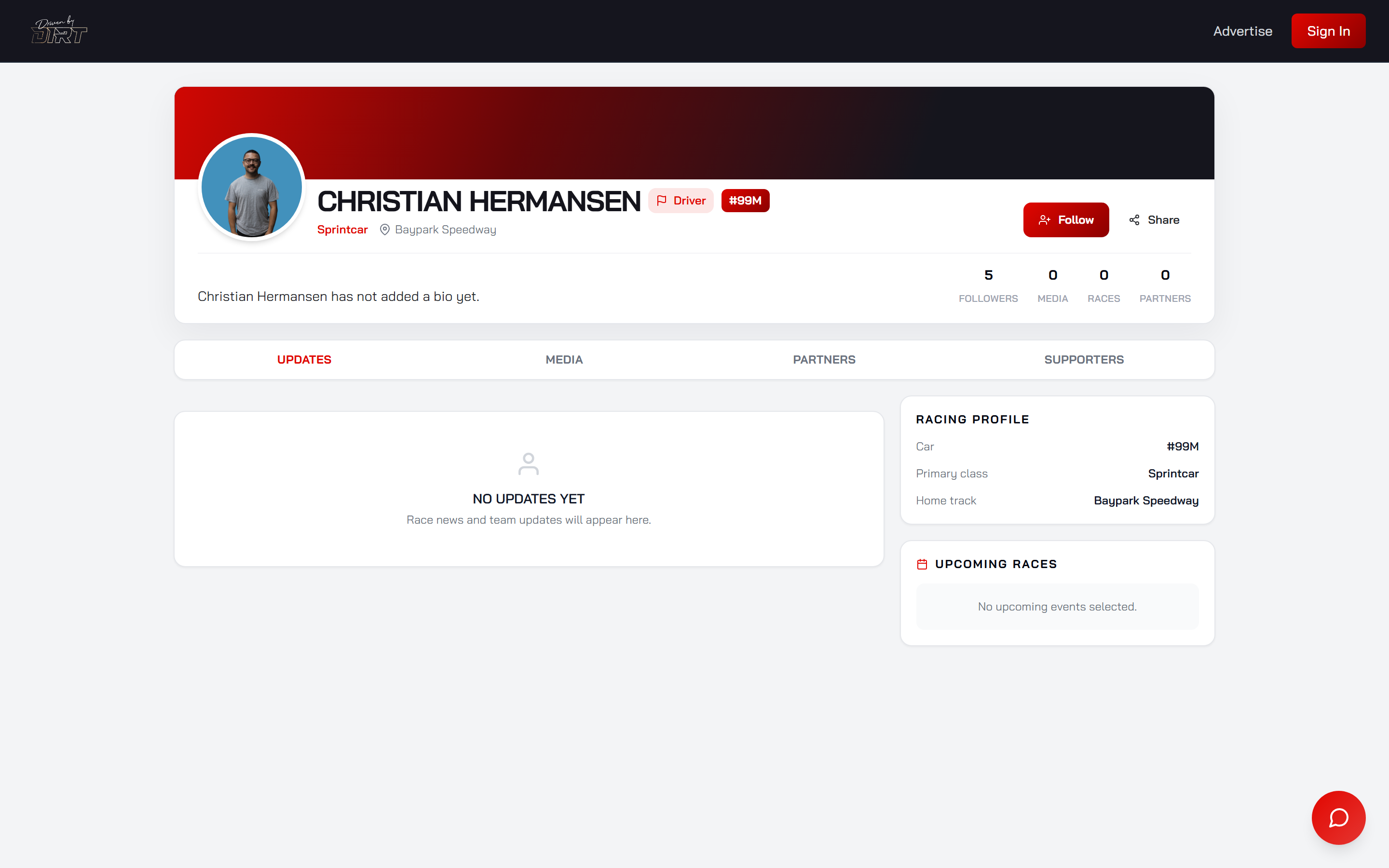
The roster behind all of it is deliberately small and deliberately verified. Fifteen profiles are live because each one belongs to a driver whose identity and racing history have been checked, not because a form was left open. A public profile on the site is a claim the platform is willing to stand behind, which matters more as the money passing through it grows. Deeper Garage tools sit behind the same membership that carries the race video, so the people watching the sport are the ones paying for the tools the sport runs on, and a driver's basics stay free.
The piece the veterans talk about is Smart Recall. On race morning, at any track, it recalls the setup the car ran there before, matched to the air temperature and track condition of the day, and offers it back with a tap. What used to live in a notebook that survived until it got wet now survives engines, classes, and the jump from a first ministock to a first stockcar. The knowledge stops belonging to whoever happens to still be in the sport and starts belonging to the next person in it.
The public face of the same work is the driver profile: updates, media, partners and supporters, a follow button and honest counters, searchable by name or car number across every racing class from compact speedcars to sprintcars. Behind it, the fans page inside the Garage shows a driver exactly who is there: followers, support received, unique supporters, where in the world they are, the most recent support and the average gift. A shareable support link runs payments straight to the driver's season costs, switched on from the same page by connecting a bank account. A season funded in twenties stops being a charity story and becomes a working model.
Sponsorship was the next thing in the way, and the platform came at it in stages. In 2024 came marketing packages and a proposal service: professional writing and design, turned around in days, built for drivers who had spent years asking businesses for money with a word document and a bootleg logo. What exists now goes further, because the proposal builder is free inside every driver dashboard. Sponsorship, as the product puts it, runs on evidence: the season, the audience, the results and the fans turned into a document with priced packages that a business can say yes to, and a checkout that closes the deal.
The shift is bigger than the paperwork. Local businesses have always sponsored local racers, but the deal lived and died on relationships and memory: what was promised, what was delivered, whether the sign actually went on the car. A platform that carries the audience numbers, the results and the payment turns the arrangement into something a business can budget for and a driver can renew. It also widens the top of the funnel. A panelbeater who would never have cold-called a speedway family can now look at a page, see the numbers and buy in at a level that suits. The driver's job shrinks from persuader to host.
The deeper change is what happens after the yes. Sponsorship money now moves through the platform like any other payment, visible to both sides, rather than travelling as a handshake and an envelope. A business gets a receipt and a relationship it can point at in its own reporting. A driver gets a season that does not stop when a single sponsor's budget does. And because the evidence is built in, the proposal is not a promise, it is a screen: fans following, races entered, results on the board, a store turning over. A sponsor used to be asked to believe. Now they are asked to look.
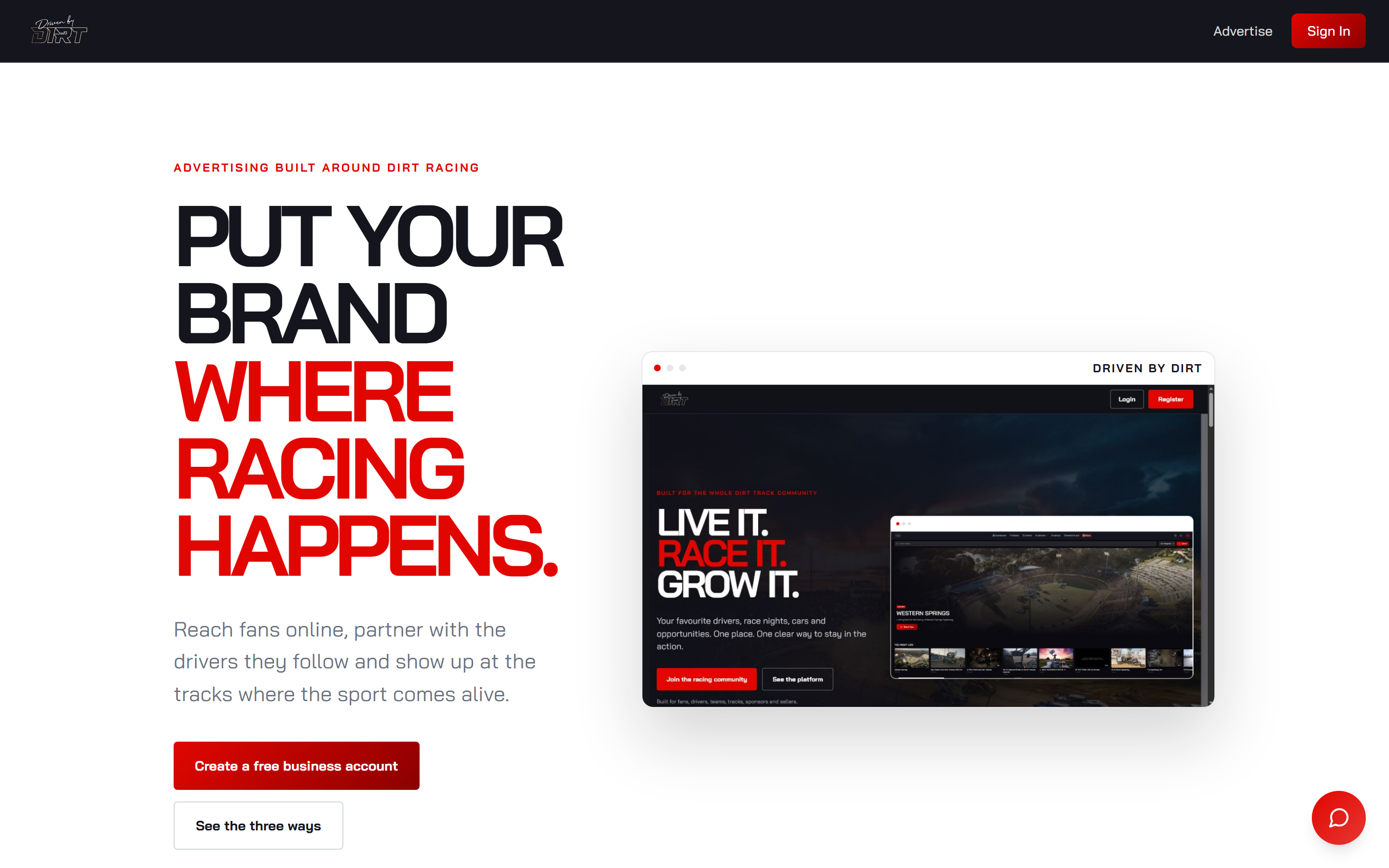
Businesses got their own door, and it opens onto the same building. A free business account leads into three ways in: reach fans online, partner with the drivers they follow, and show up at the tracks where the sport comes alive. In 2024 the company promised that businesses would be able to sell their products and services directly inside the marketplace; that promise is now just a feature, and the aisle of services listings is where it lives. The advertising side was rebuilt the same way, organised around the site's real placements after carrying, for too long, a setup that suited nobody. The lesson underneath both was the same one the summer of late shirts taught: speak to what is actually in front of you, not to the plan in your head.
The audience, meanwhile, had gathered around video, and video was the next wall. By mid-2024 the network was counting its reach at 2.8 million fans across a season and had about 200 contracted camera operators filming meetings around the country. That footage now flows through the platform itself. The home page opens on the latest meeting with a watch now button and a rail of what a viewer might like next. Live streams and on-demand runs sit on streamed delivery that does not stutter on a farm connection, and membership carries the cost of keeping it that way, the way a grandstand used to.
The pipeline behind it is the part that took the years. A meeting filmed on a Saturday used to become a handful of clips posted to wherever the algorithm sent them, credited to nobody, unfindable by Wednesday. Now the footage lands in one place, cuts are published against the meeting, the track and the drivers who appear in them, and the written race reports feed the same archive. A highlight becomes a permanent page with a structure around it instead of a post with a lifespan. The camera operator gets paid from the same rails the drivers do.
A household's Saturday has quietly changed shape around it. The morning starts with the forecast on the track page and a decision about the tow. The afternoon is a calendar entry with gate times, and a last check of the driver pages for anyone new in the class. The evening is the meeting, or the stream of it, and after lights-out the highlights are already sitting in a feed that will still make sense in a year. None of those pieces existed together before, and the sum of them is the difference between a sport you attend and a sport you follow. Follower is the word the whole platform is built around. Attendance has a ceiling set by geography and weather. Following does not.
For the fan who cannot get to Cromwell on a Saturday night, this is the sport. It is the difference between following a class and forgetting it exists between two trips south. For the sport, it is memory. Memory is what a club shows a family deciding whether their kid should start in a ministock, and what a class shows a sponsor deciding whether the crowd on the hill is worth standing in front of.
The money that keeps the lights on follows the same logic the company applies everywhere else. Browsing is free, the way a race meeting is free to look at from the fence. Membership carries the video and the deeper Garage tools, the way a grandstand seat always did. The marketplace earns its margin on what it makes and moves. Advertising pays when it actually serves something worth seeing. Small honest streams, none of them a big bet on somebody else's money, and each one traceable in the books the platform spent a winter teaching itself to trust. A business that wants to outlive its founders builds its income the way it wants its drivers to build theirs: a little from a lot of people who got something real for it.
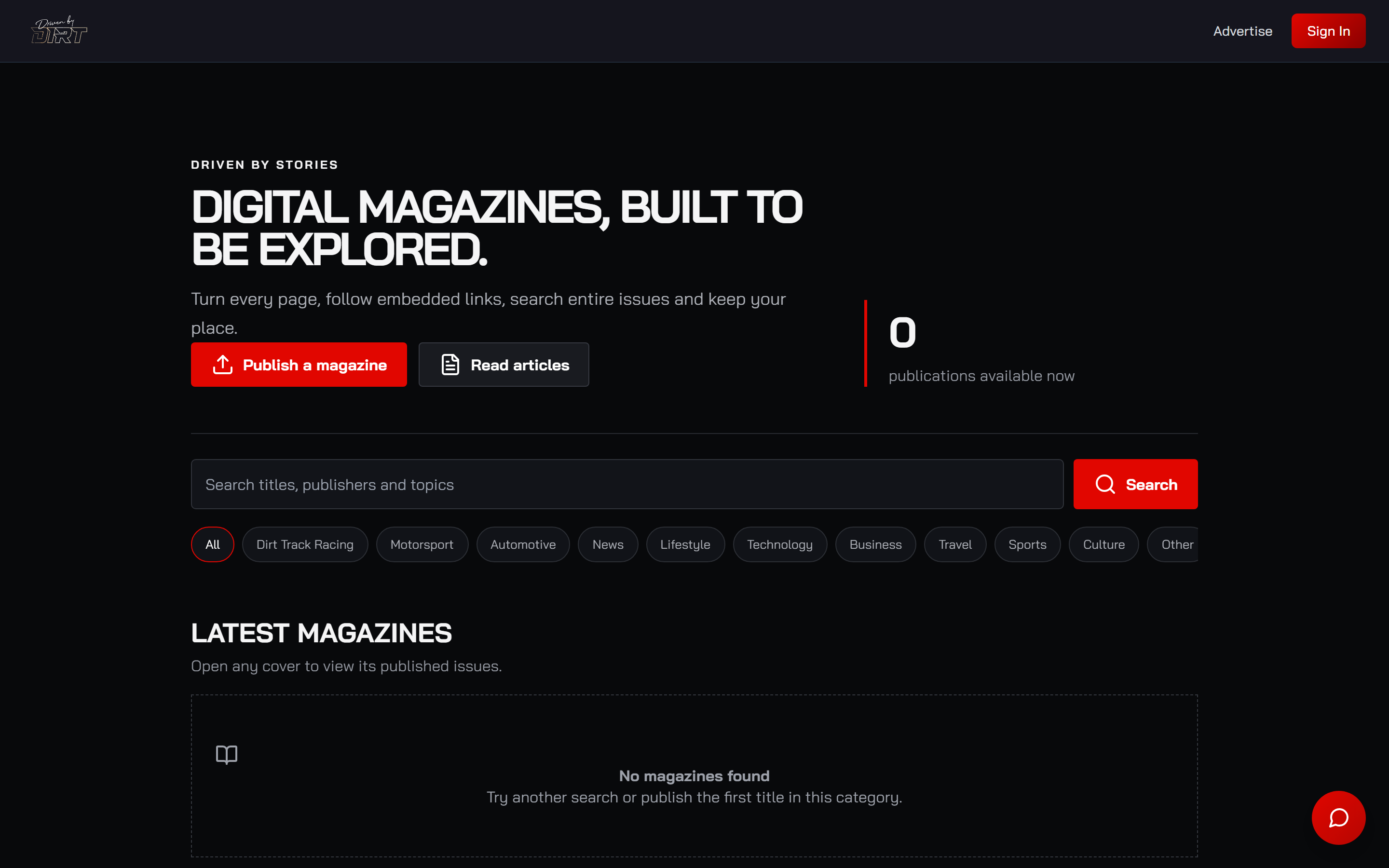
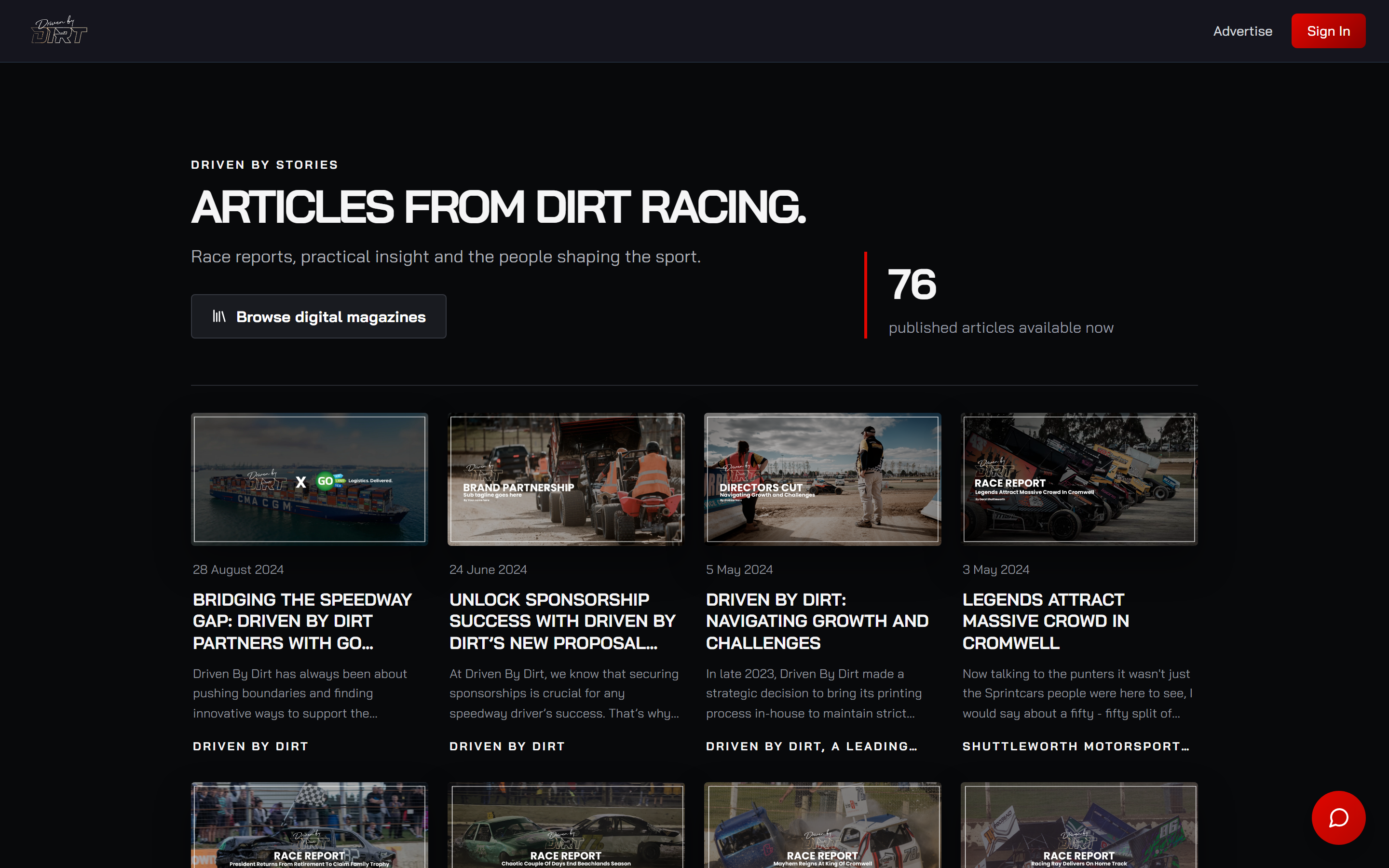
The written record sits alongside it. Seventy-six published stories carry race reports from independent media partners alongside the company's own public accounts of its growth, its failures and its partnerships, written as they happened rather than polished after. A shelf of digital magazines began as print nostalgia and became an archive. Results, photographs and people who once lived in club cabinets and Facebook captions now sit on pages that will outlive all of them, indexed, searchable and linked to the tracks and drivers they belong to.
The calendar glues the whole thing together. A hundred and forty-three meetings are listed for the summer ahead with gate times and class lists, a count that will keep climbing as clubs file their dates, and every track page carries a race-day forecast, because a rained-out meeting costs a club its best night of the year and every family in the sport has driven two hours to find that out the hard way. The track pages do quiet work of their own: a circuit's address, its classes, its history and its upcoming meetings in one place, which is more than most clubs have ever had about themselves in one spot. Fans plan a summer in one place. Clubs get an audience they can count before the gates open, which is the difference between printing 400 programmes and printing 600.
Under the floor, the unglamorous weeks kept their rhythm. Receipts, records, notifications, search, forecasts and the thousand small correctnesses that make a website feel solid were built, broken and rebuilt between race nights. When something went quiet between two systems, it was traced down and restored rather than left for the next busy month. The people doing it were the same people packing the print runs. None of it photographs well. Each of it was the thing in the way on a given Tuesday, and the Tuesdays are where the six years actually went.
There is a version of this story that reads as a technology story, and it is the wrong one. The technology was never the scarce thing. What was scarce was the willingness to keep showing up to a problem that renews itself, in a sport small enough that no global company will ever send a product team to Gisborne, and patient enough to do the boring weeks between the visible ones. Speedway's fixture list is a chain of one-off events, each run by different hands, each one the whole year for somebody. Any system meant to serve it has to be rebuilt around that shape rather than around a roadmap, which is why the site grew the way a club grows, one trust fall at a time.
What it adds up to is easiest to see at the bottom of the classes. A 14-year-old starting in a ministock this summer can have a profile with her number and home track by dinner, a store with no stock risk by the weekend, a support link in her bio, a sponsorship proposal for the local plumbing firm drafted from her actual results, and a payout landing in a bank account in her own name. The Garage will remember what her car liked at Huntly in January before her family does. When she steps up through the classes, ministock to stockcar, production saloon to something faster and more expensive, the record goes with her, and the first sponsor she outgrows can be replaced without a season of cold calls. The ladder still costs what it costs. Nothing about the climb is free, and nobody at the track believes otherwise. What has changed is that every rung of it now has machinery attached, and the machinery belongs to the sport rather than to whoever happened to build a page that year.
The company decided the ending before it worked out the middle, and the ending has not moved: a sport in which the people who fix the cars are paid by the sport itself, from their first season, without waiting on a promoter's decision or a lucky break. Every feature and every fix gets judged against that. The middle keeps being rewritten, because the thing in the way keeps changing: printing, then selling, then counting, then equipping, then funding, then recording. Each obstruction, once removed, reveals the next one, and the team has stopped pretending there is a finish line. There is only the next meeting, and what stands between it and going well.
Tomorrow night the best pairs roll out at Awapuni under whatever the sky is doing. On Saturday the fireworks go up at Huntly, a grand opening runs at Meremere, and the following weekend Woodford Glen stages its super saloon cup in Christchurch. A copy of the season sits in 10,000 pockets, and opening nights scroll past on a screen in the cab of a tow vehicle somewhere up State Highway 1. Somewhere in the infield a laptop is open watching the numbers move, and somewhere in a shed a whiteboard holds the next thing in the way. The flag drops on all of it at the same time.